Table of Contents
Are you thinking of making a independent trip to NamibiaIn this post we tell you about our Complete 24-day family tour of Namibia, touring the country in a 4x4 with rooftop tents, among safaris, deserts, national parks, towns with history and landscapes that seem from another planet.
A logbook of our journey that can help you plan your route, get ideas, or simply enjoy our anecdotes, within our TRAVEL GUIDE TO NAMIBIA ON YOUR OWN IN A 4X4.
Is this your first time in Namibia?
👉 Start with our Namibia travel guidewhere you will find all the information about budget, best time, safety, 4x4 rental, accommodation, visa and route planning.
After:
Other related guides:
- 24-day Namibia itinerary
- Namibia: What to see
- Namibia on your own
- How much does it cost to travel to Namibia?
- Namibia with children
About us
We are the kucavana familyWe travel with our two children and our adopted dog, Max. We usually travel in our campervan, Kucavana, hence the name of our blog (as a baby, Anna couldn't pronounce "campervan" and said "Kucavana"). But we also enjoy traveling by bicycle, by plane, and backpacking—the point is to have adventures as a family. The one writing this is me, Pilar, the mom of the family and perhaps the craziest one. I enjoy every family learning experience and I hope to help you enjoy it as much as we do. We do it by traveling.
To be closer to you follow us on our social networks: YouTube e Instagram
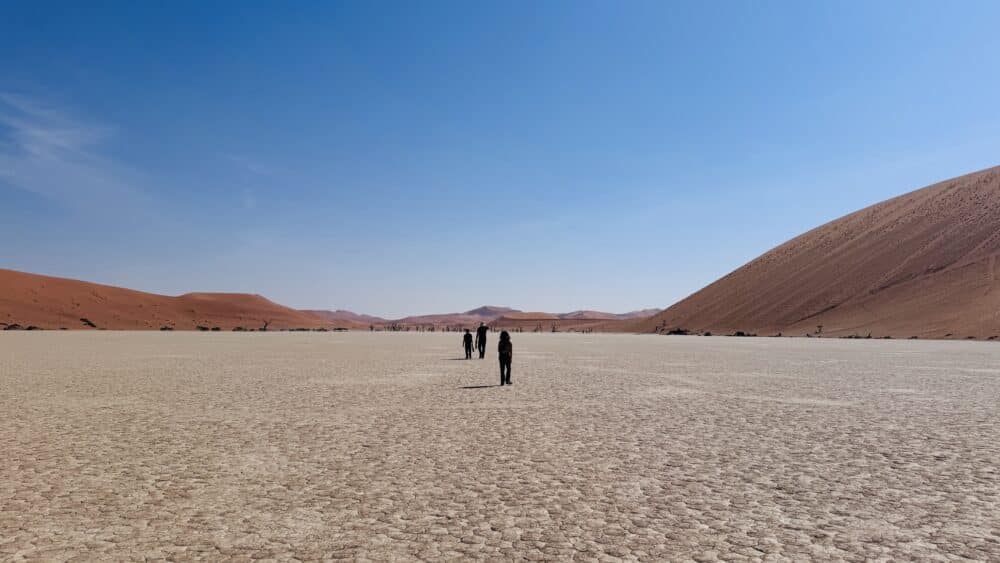
Our 24-day Namibia itinerary summarized in numbers
| Date | Information |
| Duration | 24 days |
| Trip type | Namibia on your own |
| Vehicle | Toyota Hilux 4x4 |
| kilometers | 5.000 km |
| Travellers | 2 adults + 2 children |
| Budget | €13.313 |
Why did we choose Namibia for this family trip?
Namibia was one of those destinations that had been on our minds for a while. We wanted a trip full of adventure, nature, and freedom, but one that we could actually do. independent travel and family outings, without depending on agencies or a closed circuit.
The idea of traveling through Namibia in 4x4 with rooftop tentsSleeping in campsites surrounded by nature, seeing wild animals in their natural habitat, and traversing some of Africa's most spectacular landscapes seemed like a fantastic plan. And it was.
IMPORTANT TIPDon't travel to Namibia without a good travel insuranceSeriously. The distances there are enormous, private healthcare is expensive, and if something happens in the middle of a national park or in a remote area, helicopter evacuation can cost a fortune. After thoroughly comparing different options, we hired... IATI StarIATI is the only insurer with over one million euros in medical coverage, which is crucial in destinations where any unexpected event can significantly increase costs. Furthermore, IATI offers 24/7 Spanish-language support and an app for online medical consultations, which was incredibly useful during our trip. Here's our link with 5% discount on any IATI travel insurance policy If you go to Namibia, it's really worth traveling with peace of mind.
But Namibia wasn't just safaris and deserts. It was also contrast, history, inequality, people walking miles to work, corrugated iron townships next to cities with German colonial heritage, and many conversations that helped us understand the country better.
Namibia gave us one of the wildest, most intense and exciting routes we have ever done as a family.
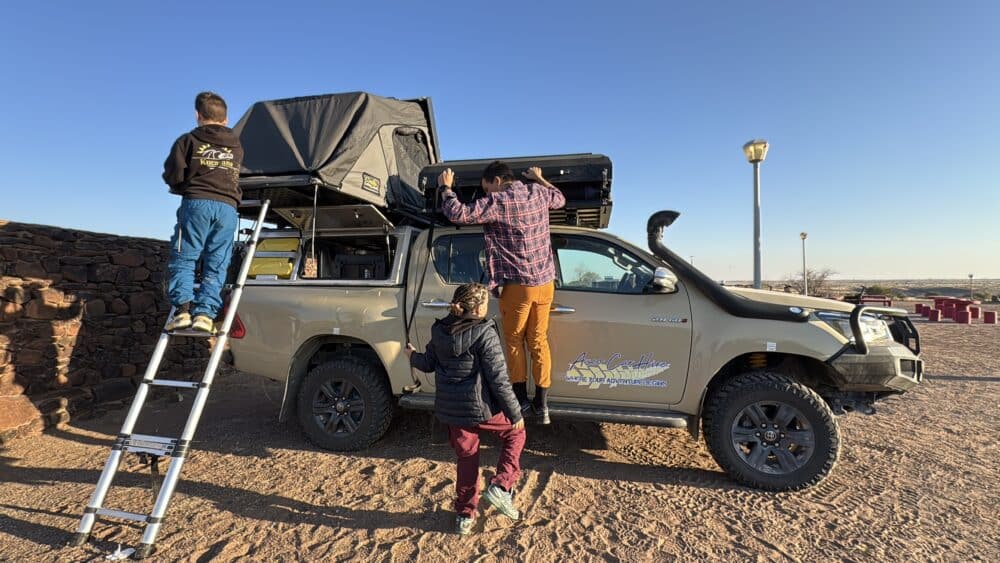
24-day self-guided Namibia itinerary summary
Before we get into the full travelogue, here's our actual day-by-day itinerary for Namibia:
| Daytime | Stage of the route |
| Day 1 | International flight Barcelona – Namibia |
| Day 2 | Arrival in Windhoek – Waterberg National Park |
| Day 3 | Waterberg National Park |
| Day 4 | Caprivi Strip to Bwabwata National Park |
| Day 5 | Bwabwata National Park |
| Day 6 | Hoba meteorite on the way to Etosha National Park, Namutoni southeast entrance |
| Day 7 | Etosha National Park, south-central Halali zone |
| Day 8 | Etosha National Park, northwest Olifantsrus |
| Day 9 | Road to Palmwag and Damaraland |
| Day 10 | Twyfelfontein and the Damara |
| Day 11 | Skeleton Coast and Dorob National Park |
| Day 12 | Cape Cross and Spitzkoppe |
| Day 13 | Swakopmund |
| Day 14 | Swakopmund, its township and Sandwich Harbor in Walvis Bay |
| Day 15 | Gecko Camp, north of Namib-Naukluft Park |
| Day 16 | Solitaire and Namib-Naukluft National Park among waterholes and baboons |
| Day 17 | Sossusvlei, Deadvlei and Sesriem Canyon |
| Day 18 | Lüderitz |
| Day 19 | Penguins of Lüderitz and Kolmanskop |
| Day 20 | Aus and his wild horses on the way to Fish River Canyon |
| Day 21 | Ai-Ais Hot Springs, Fish River Canyon in the south |
| Day 22 | Last night in Hardap National Park |
| Day 23 | Hardap National Park – Windhoek |
| Day 24 | Arrival home |
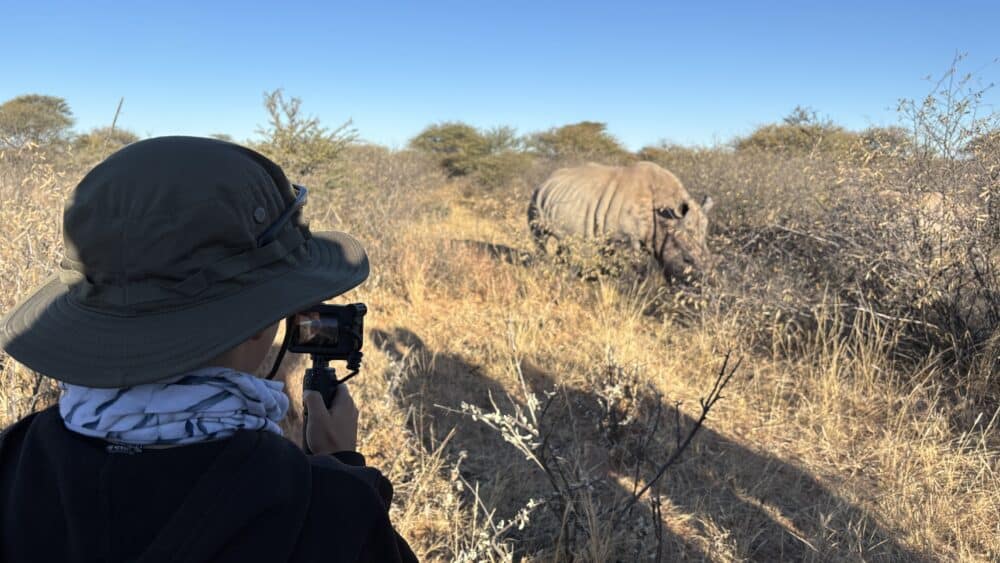
Days 1, 2 and 3: Waterberg National Park: our first contact with the real Namibia
We landed in Windhoek at 7:30 in the morning, after a full day of flying, having flown from Barcelona with a layover in Munich. One night on a plane, so-so food, little sleep, but plenty of enthusiasm to start the adventure.
As soon as we arrived, we were picked up by the people from Disgusting Car Hire to take us to pick up our 4x4 with two rooftop tents. After the technical explanations—about refrigerators, tanks, tents, and tools—we made the first practical stop of the trip: supermarket, water, food, and supplies.
IMPORTANT TIP: If you're going to Namibia, rent a 4x4 with a tent on top; it's definitely the best option for independent travel. Disgusting Car, We rented from them without any incident and highly recommended; they gave us a 5% off which you can all use by booking with them on their website and adding the discount code @KUCAVANA
Unbeknownst to him, that supermarket was in Katutura, the most famous township in Windhoek. And that's where the first shock of the trip came. Tin shacks, children begging for food, heavy security at the supermarket entrance, and a reality very different from the postcards of dunes and safaris.
We had no problems whatsoever. On the contrary, we found people who were kind, polite, and above all, resilient. But it was a harsh dose of reality as soon as we landed.
Then we headed towards Waterberg National ParkFirst on a paved road, then on a dirt track. And that's where the Namibia we had imagined began: baboons, warthogs, dik-diks, and a family of giraffes that moved us as if the entire trip had already been worthwhile just by arriving.
We slept two nights in Waterberg Wildernessin a lovely little family home. The first night, though, we discovered that Africa can also freeze your eyelashes: we ended up sleeping at -2 ºCWithout heating and with everything powered by solar panels. Tip from a mom who loves to be cold while traveling: in Namibia in winter, bring down jackets, thermal underwear, a hat, and gloves. It's not about showing off, it's about survival.
The next day we did a circular hike along the marked trails of the lodge, linking the Andersson Trail and the Dassie Trail, about 7 km between giant termite mounds, reddish mountains and views of the Waterberg plateau.
In the afternoon came one of the highlights: the Rhino DriveWe saw white rhinos very close up, even on foot accompanied by armed guides who knew each animal perfectly. We also saw giraffes running and lots of other wildlife around.
Waterberg was our first great lesson in Namibia: wild nature, unexpected cold, brutal animals, and a social reality that shouldn't be looked at askance.
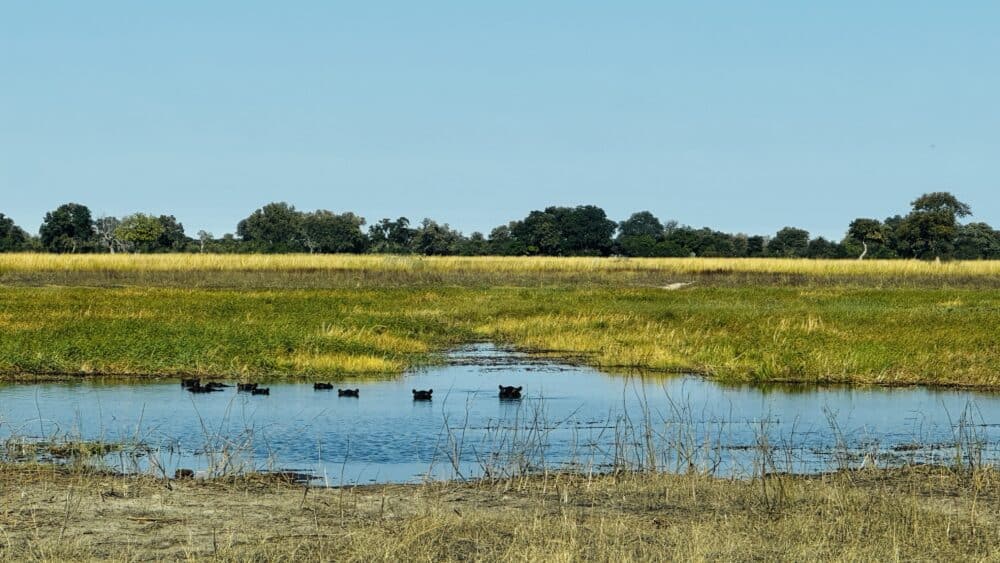
Days 4 and 5: Caprivi Strip: sleeping over the Okavango surrounded by hippos
After two nights in Waterberg, one of the longest days of the entire Namibian route awaited us: almost eight hours on the road to the Caprivi Strip, one of the most surprising and unknown regions of the country.
As we traveled north, the landscape changed completely. Small villages appeared, along with craft stalls, corrugated iron houses, and much more life than we had seen before. It was a different Namibia.
We slept in Ngepi Campin an incredible treehouse built over the Okavango River. As soon as we arrived, we saw crocodiles and hippos from the cabin itself—an unforgettable experience.
That night we barely slept a wink between the sounds of the hippos and the strange knocks we heard from under the cabin. It was our first encounter with the wildest Africa.
We tell you all the details of this stage in our guide to the Caprivi and Ngepi Camp strip.
Bwabwata National Park: our first big self-drive safari
The next day we explored Bwabwata National Park, one of Namibia's least known national parks and one of the great surprises of the trip.
We toured the sandy tracks of the la Buffalo Core Area, seeing hippos, crocodiles, elephants, kudus, buffalo and many birds.
But the most exciting moment came when we spotted our first and only lionesses of the entire trip. The strangest thing was that they were very close to an area where, just minutes before, I had gotten out of the car to help maneuver in the sand. When we thought about it later, we burst out laughing… and a little scared. Typical rookie mistake…
In the afternoon we completed the experience with a boat trip on the Kwando River among hippos, crocodiles and a spectacular sunset.
We tell you about all the sightings and tips for visiting this park in our Bwabwata National Park guide.
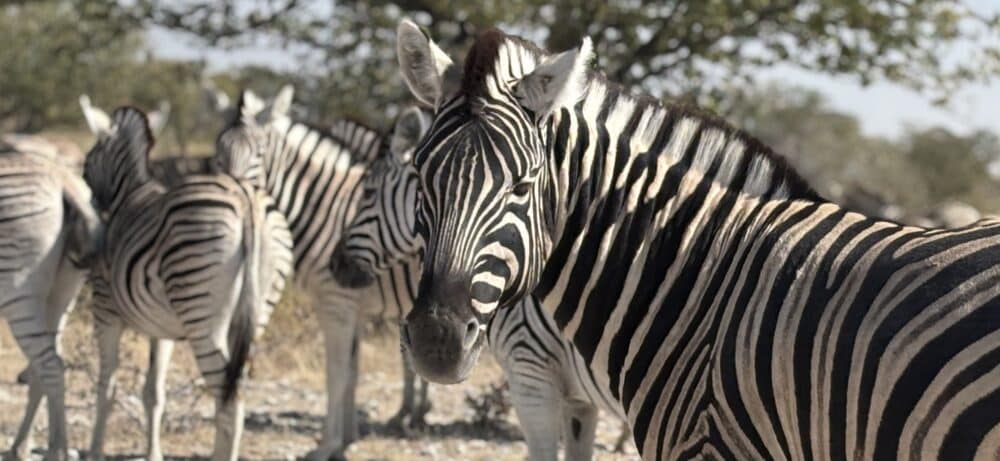
Days 6, 7 and 8: Etosha National Park: three unforgettable days of self-drive safari
After visiting the Hoba meteorite, the largest meteorite preserved on Earth, we arrived at Etosha National Park, Namibia's most famous national park.
For three days we crossed the park from east to west, sleeping in Namutoni, Halali and Olifantsruswhich allowed us to discover very different landscapes and ponds.
We saw giraffes, zebras, wildebeest, oryx, elephants, rhinoceroses, jackals, and all sorts of other wildlife, although our obsession throughout our stay was finding a large male lion. We had no luck.
One of the most special moments was watching elephants, zebras, and rhinos drinking for hours at the illuminated Halali watering hole at sunset. We also remember a huge herd of elephants crossing the track just a few meters from our 4x4 and the giraffes' curious, impossible positions as they drank water.
Etosha was undoubtedly one of the highlights of our 24-day Namibian trip and an essential stop on any independent travel itinerary.
We tell you all the details, anecdotes, campsites, waterholes and tips for doing a self-drive safari in our complete guide to Etosha National Park with all our detailed experience.
Day 9: Damaraland: a well-deserved rest amidst desert landscapes
After leaving Etosha we continued along the route towards Damaraland, one of the most remote and spectacular regions of Namibia. The landscape changed completely, and mountains, volcanic areas, and that characteristic sense of isolation began to appear.
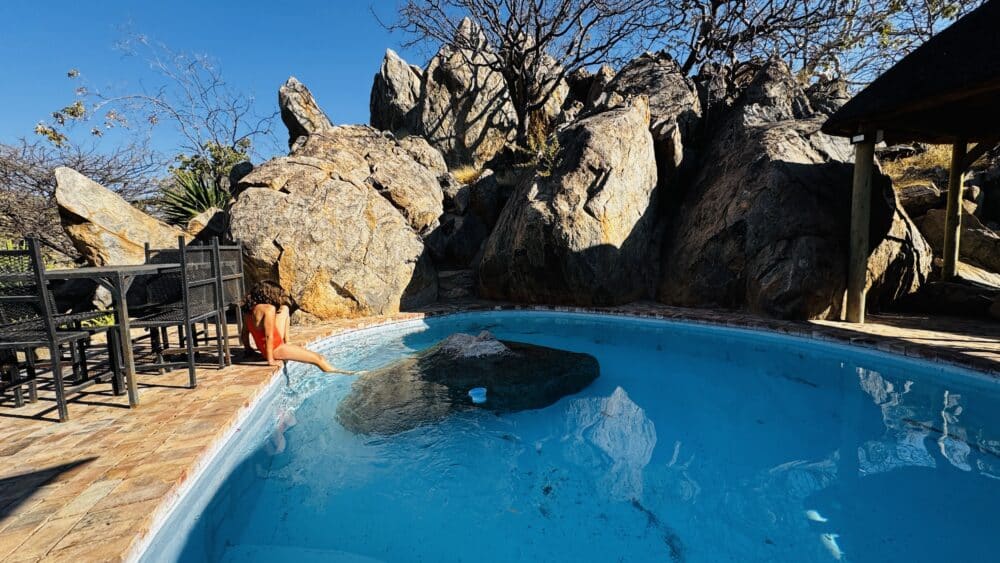
After several intense days on safari, we decided to take it easy. We slept in Kaoko Bush LodgeIt was one of our favorite accommodations on the entire route. We were welcomed with a juice, and the pitch even had a private bathroom with a shower just for us.
We took the opportunity to do laundry, download photos, plan the next stages of our trip, and enjoy the pool surrounded by Cape hyraxes and enormous colorful lizards. The only thing that worried us a little were the signs warning of snakes and scorpions. The footprints in the sand showed they were around, although luckily we didn't see any.
At night the temperatures plummeted again to around 1°C, but inside the tent we slept surprisingly well.
We tell you all the details of this stage in our complete Damaraland guide.
Day 10: Twyfelfontein: rock engravings and unexpected conversations
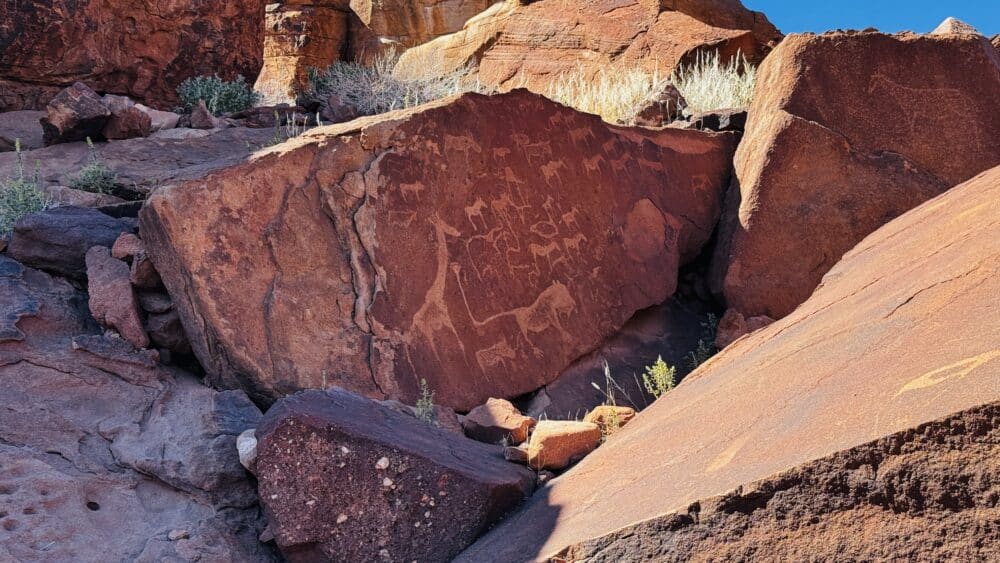
The next stage took us to Twyfelfontein, one of Namibia's most important World Heritage sites.
The gravel tracks were in pretty good condition, and along the way we even picked up another local hitchhiker, Jonos, a Herero man returning from the lodge where he worked to a town almost an hour away to do some shopping. These small encounters were a constant throughout the trip and helped us better understand the reality of the country.
In Twyfelfontein, we visited the famous rock carvings, over 6.000 years old, one of the most important archaeological sites in southern Africa. Beyond the historical value of the place, we particularly enjoyed imagining how those communities survived in such an extreme environment thousands of years ago.
We tell you all about the engravings, the visit and our experience in the complete guide to Twyfelfontein.
Day 11: Skeleton Coast and Dorob National Park: Between fog, seals and endless roads
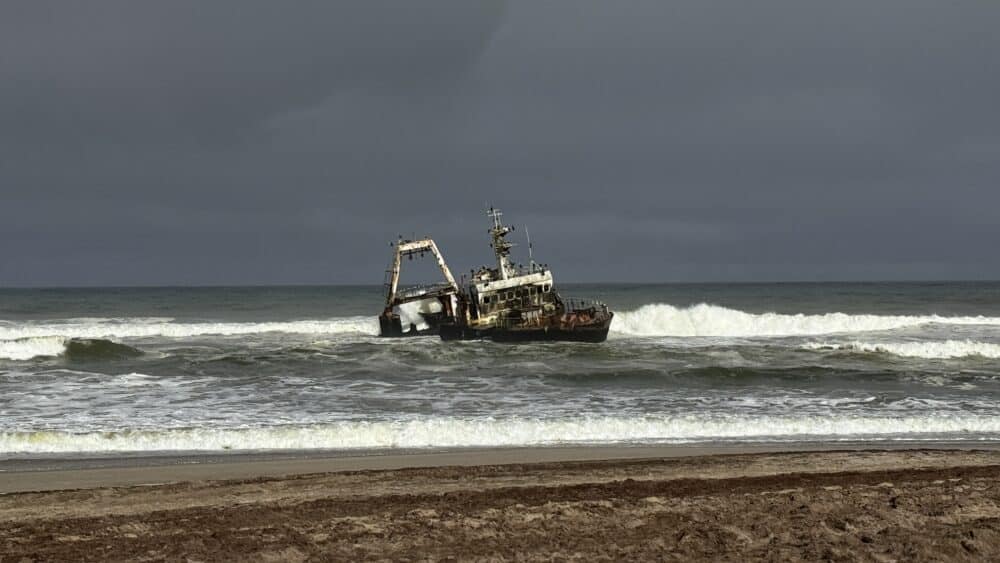
From Twyfelfontein we continued towards the legendary Skeleton Coast, one of the wildest and most isolated areas of Namibia.
This coast owes its fame to the numerous shipwrecks that remained trapped between the Atlantic Ocean and the desert for centuries. As we approached, the landscape became increasingly arid, solitary, and spectacular.
It was one of those days when you simply enjoy driving. Kilometers and kilometers with hardly any traffic, the ocean suddenly appearing through the fog, and the constant feeling of traveling through one of the most remote corners of the planet.
We tell you all the details of this stage in our complete Skeleton Coast guide.
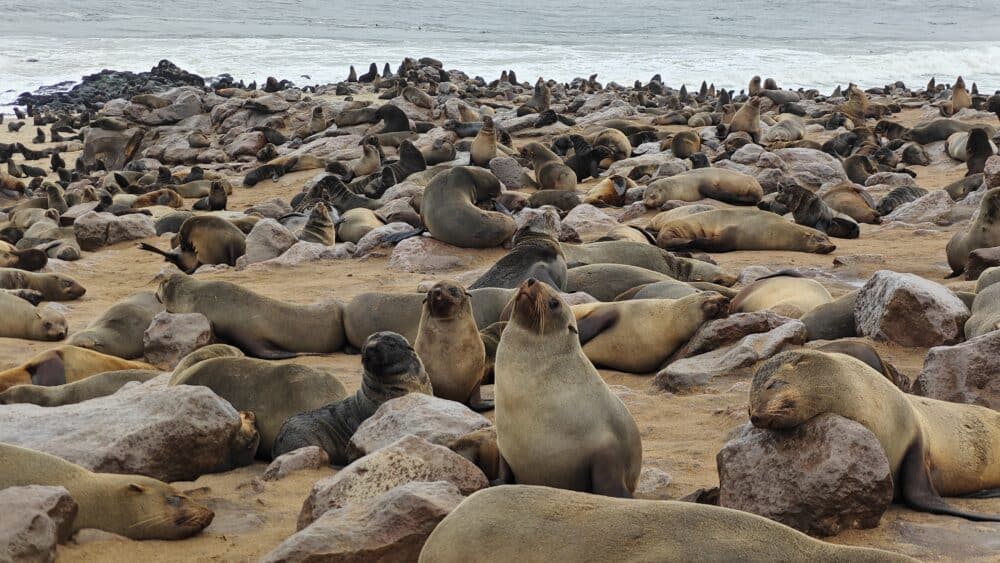
Day 12: Cape Cross and Spitzkoppe: seals, granite and one of the best sunsets of the trip
Our next stop was Cape CrossHome to Namibia's most famous seal colony. We had seen photographs before traveling, but nothing prepares you for finding yourself surrounded by thousands of seals at the same time.
Then we continued towards SpitzkoppeIt is probably one of the most photogenic mountains in Namibia. Its enormous granite formations emerge almost magically from the middle of the desert.
We spent the afternoon exploring the area and enjoying a spectacular sunset. Sleeping there, surrounded only by rock, silence, and stars, was one of those moments we still remember when we think of Namibia.
We tell you all the details, routes and must-see places in our Spitzkoppe guide.
Days 13 and 14: Swakopmund and Walvis Bay: discovering the two Namibias
After many days of safaris, tracks and campsites, arriving at Swakopmund It was almost like going back to Europe. German colonial houses, cafes, modern supermarkets, real estate agencies with properties worth hundreds of thousands of euros, and a seafront promenade full of families strolling or fishing.
We settled into a very comfortable apartment where, after so many nights in a tent, we were incredibly grateful for a real bed and a hot shower. Walking around the city, we were struck by the enormous inequality we had observed throughout our trip. Swakopmund felt like a small European corner in the middle of Africa.
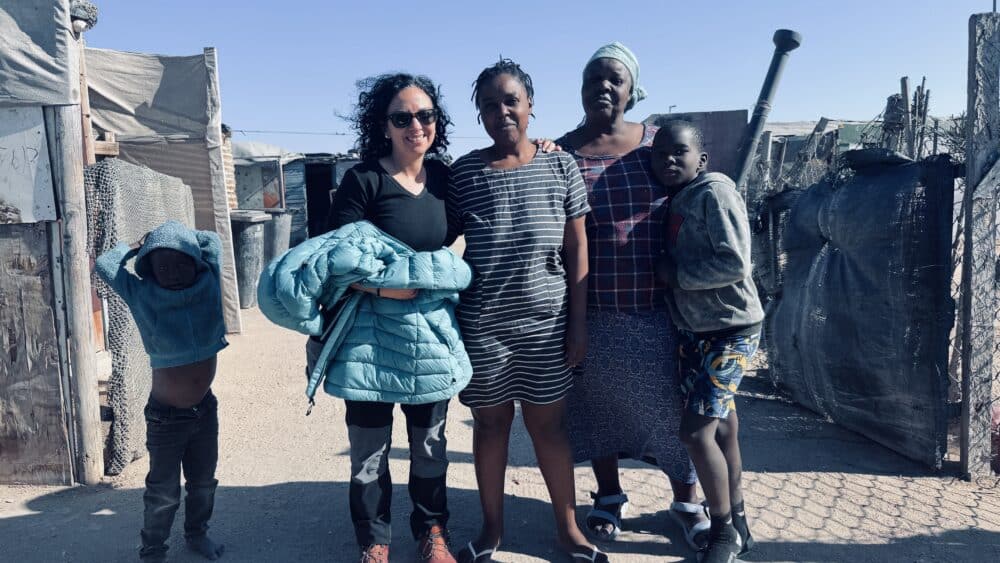
The next day we wanted to see the other side of the city and we did a tour of the township of MondesaIt was one of the most interesting experiences of the entire trip. We visited the local market, met a Herero family, learned about their traditions, and explored both the more modern areas of brick houses and the humbler areas of corrugated iron dwellings where thousands of people still live.
We also visited a Damara women's project, shared a traditional Ovambo meal, sampled the famous mopane worms, and finished by listening to a local choir that gave us goosebumps. More than a tourist excursion, it was a genuine lesson on Namibia's recent history and the lingering effects of apartheid.
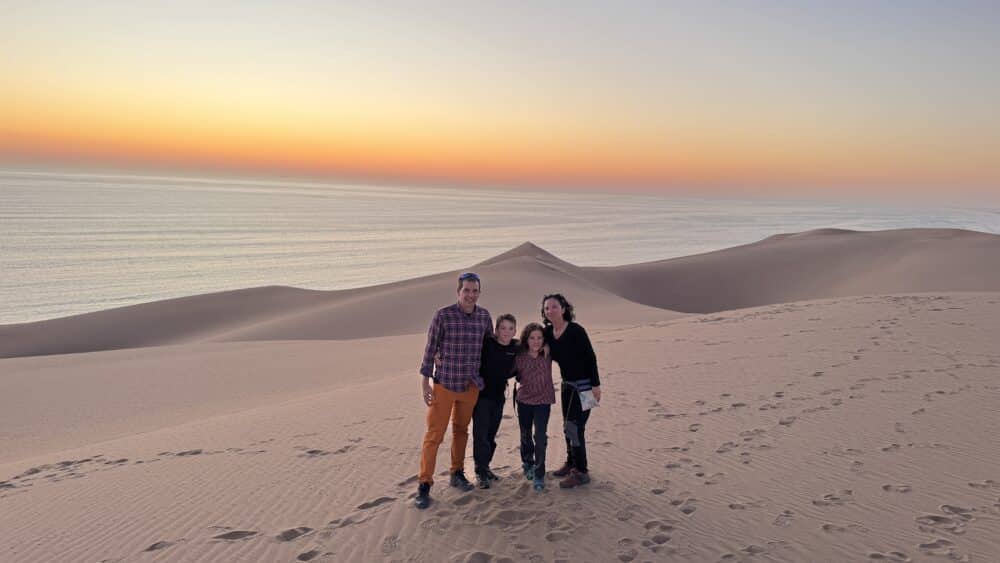
In the afternoon came another of the great experiences of the trip: Sandwich HarborIn Walvis Bay, exploring the giant dunes that drop directly into the Atlantic Ocean in a 4x4 was absolutely spectacular. We even saw sea lions and several whales in the distance before venturing into the enormous reddish dunes.
During the excursion, one of the vehicles got stuck in the sand and we had to be towed out, something our guide explained can happen even to very experienced drivers. Watching the sunset over the dunes with a drink in hand was one of those moments that alone justifies a trip to Namibia.
Between Mondesa and Sandwich Harbour we experienced two completely opposite moments, but which perfectly summarize what Namibia is: spectacular landscapes, enormous social contrasts and a history that remains very present in the country's daily life.
We tell you all the details of these experiences in our complete guides to Swakopmund and Walvis Bay.
Day 15: Namib-Naukluft North: quiver trees, canyons and an unforgettable night at Gecko Camp
After leaving the Atlantic coast behind, we headed inland through Namibia. During the journey, we began to see our first quiver trees or quiver trees, one of the most emblematic species of the south of the country and currently threatened.
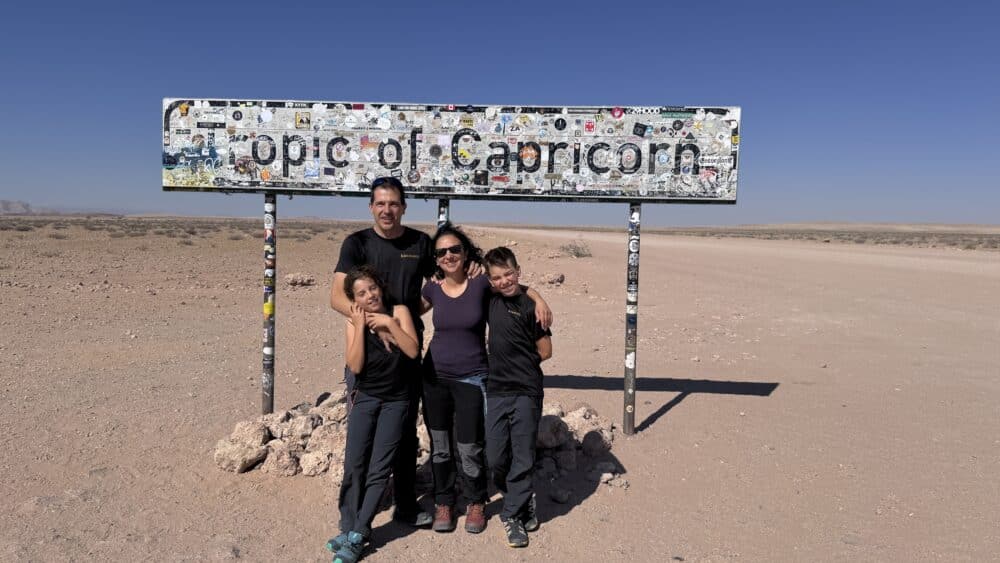
The road treated us to some spectacular scenery, especially as we crossed the impressive Kuiseb canyon and the famous poster of Tropic of Capricorn, where, like almost all travelers, we took the obligatory photo.
That night we slept in Gecko CampOne of the most special accommodations on the route. For the first time, we left our rooftop tents behind and slept in a large, pre-pitched family tent. Among horses roaming freely around the campsite, a barbecue dinner of kudu meat under a sky full of stars, and conversations with the German owners who had decided to change their lives and settle in Namibia, we enjoyed one of the most relaxing nights of the trip.
We tell you all the details of this stage and the accommodation in our complete guide to Gecko Camp and the northern Namib-Naukluft.
Day 16: Solitaire and the Naukluft Mountains: baboons, hiking and hidden pools
After a spectacular breakfast at Gecko Camp, we set off for the heart of the Namib-Naukluft National Park.
Before entering we stopped at Solitaire, probably the most famous settlement in the Namib Desert. We took the opportunity to refuel, have coffee, and try their famous apple pie, considered by many to be the best in Namibia.
Once inside the Naukluft Mountains, we encountered a landscape completely different from anything we had seen before. Greener, more mountainous, and full of baboons that seemed to appear everywhere.
From the campsite we took a hiking route to several natural water poolsFollowing part of the famous Waterloo Trail. After so many days of driving safaris, we were so grateful to be able to walk again.
During the hike, we saw dozens of baboons, small streams, and several natural pools hidden among the mountains. We even ended up taking a dip in one of them before returning to the campsite to enjoy another barbecue under the stars.
It was a simple, quiet day, perfect for slowing down before visiting one of Namibia's most famous places.
We tell you about all the routes, pools and practical tips in our guide to the Namib-Naukluft National Park.
Day 17: Sossusvlei, Deadvlei and the Sesriem Canyon: Namibia's most famous landscape
If there's one image that represents Namibia, it's probably this one. deadadvlei.
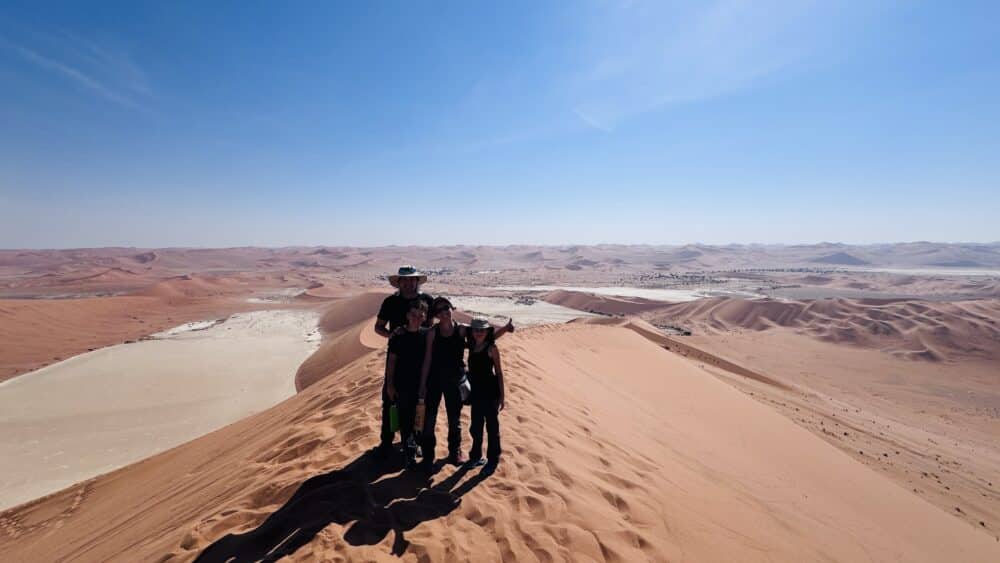
That's why we got up early to visit one of the most spectacular areas in the country: Sossusvlei and Deadvlei, in the heart of the Namib Desert, considered one of the oldest on the planet.
After covering the last few kilometers of sand in our 4x4, we arrived at the famous reddish dunes. Although there were far more tourists than anywhere else on the trip, the landscapes were still breathtaking.
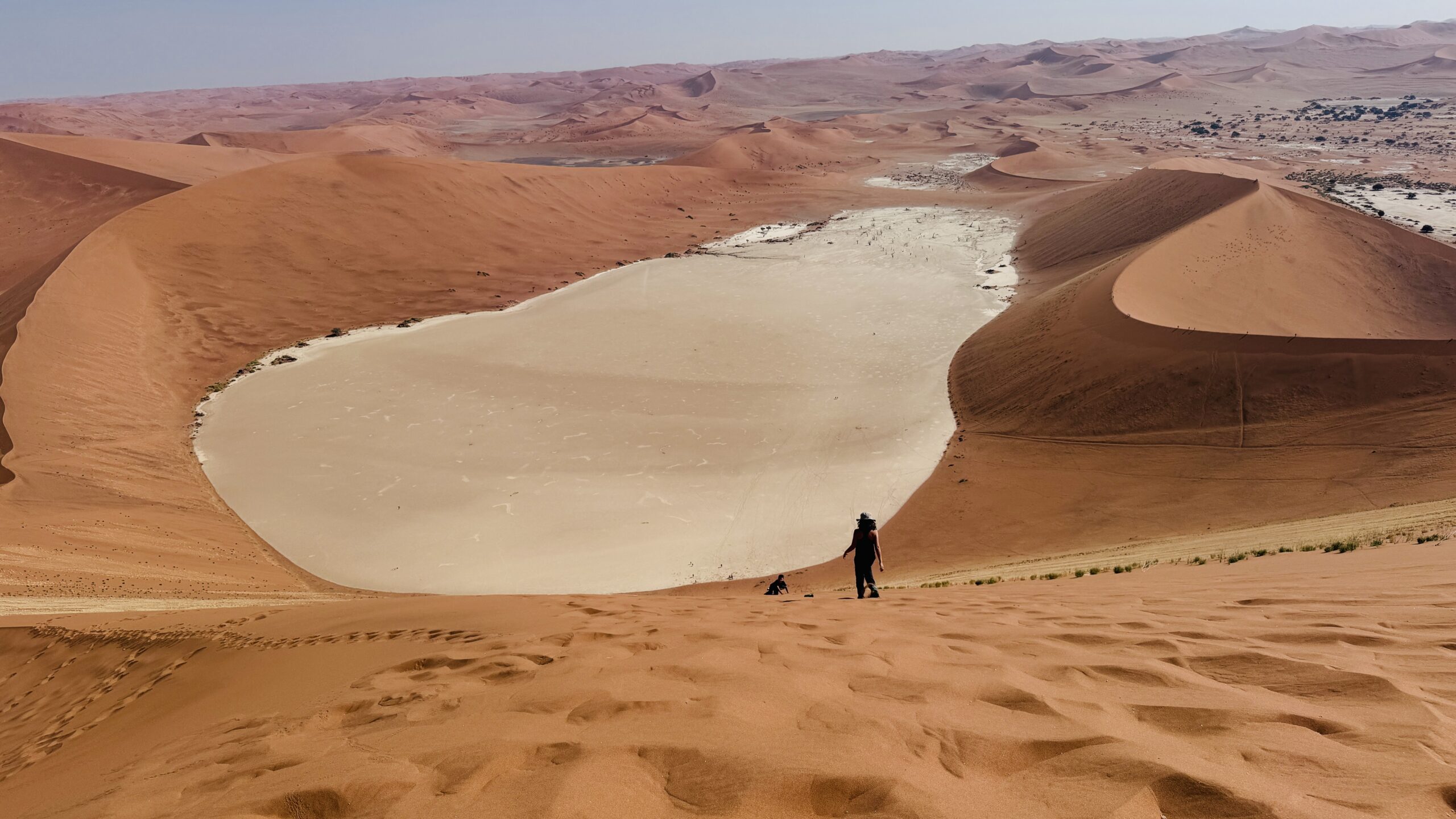
We decided to climb the enormous Big DaddyThe highest dune in the area. The climb was tough, especially because of the heat and the sand, but the views from the top completely compensated for the effort. The descent, running through the sand towards Deadvlei, was as fun as it was exhausting.
Once on the salt flat, surrounded by the famous petrified trees over 900 years old, we understood why this place has become one of Namibia's icons.
Before the day ended, we also visited the Sesriem canyonA very pleasant surprise. Its walls provided shade and coolness after the heat of the dunes, and walking inside was the perfect complement to an unforgettable day.
That night we slept in Sesriem Camp, the only campsite located within the park, a prime location for exploring this area of the desert.
We'll tell you about our complete experience, how to climb Big Daddy, and all the tips for visiting Sossusvlei, Deadvlei, and Sesriem in their specific guides.
Day 18: Lüderitz and Shark Island: colonial history, wind, and new friendships
After leaving the Namib Desert behind, we headed towards the southern tip of Namibia. It was several hours of driving through immense landscapes where we continued to see wildlife almost every day: oryx, Cape gazelles, mountain zebras, ostriches, and even bat-eared foxes.
On the way we passed by Off and by KolmanskopHowever, upon arrival we discovered that the ghost town had already closed and we would have to return the next day. We also passed through numerous farms where the social inequalities that had given us so much to reflect on throughout the trip remained very visible.
Finally we get to Lüderitz, a coastal city with a strong German heritage and a very different atmosphere from the rest of Namibia. We slept in Shark IslandA spectacular campsite by the sea, although extremely windy. We also discovered the darker history of the place, where one of the first concentration camps created by the German Empire against the Herero and Nama peoples was located.
The afternoon also brought us an unexpected experience: we met a Spanish honeymooning couple with whom we immediately clicked, and we explored the city together. One of the funniest moments was going into a local hair salon where Anna got braids like Namibian girls, and we ended up learning some words in Oshiwambo and discovering some local music.
We tell you the whole story of the city, Shark Island and our complete experience in the Lüderitz guide.
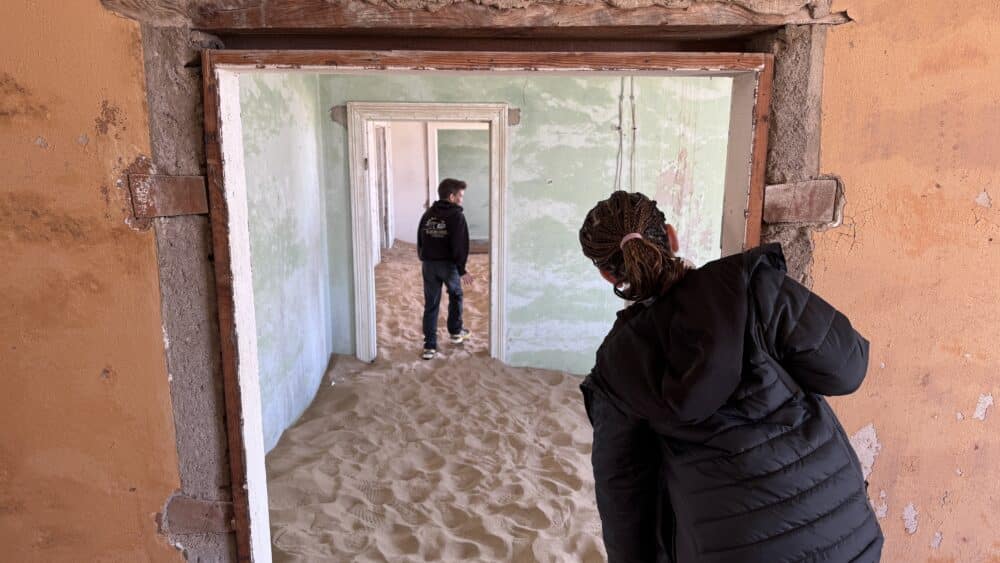
Day 19: Kolmanskop and the Cape penguins: a morning between history and nature
The next day we got up early for a boat trip in search of the famous Cape penguinsAn endangered species that lives in small colonies off the coast of Namibia. We watched them from a distance so as not to disturb them, along with cormorants and some dolphins, although the strong waves didn't make the walk very enjoyable.
Then we finally visited KolmanskopNamibia's most famous ghost town. Born during the diamond rush of the early 20th century, today its old colonial houses have been invaded by desert dunes, creating one of the most photogenic places in the country.
It was a visit that we loved because of the mix of history, decay and beauty that the place conveys.
We'll tell you all the details and tips for visiting Kolmanskop in our complete guide.
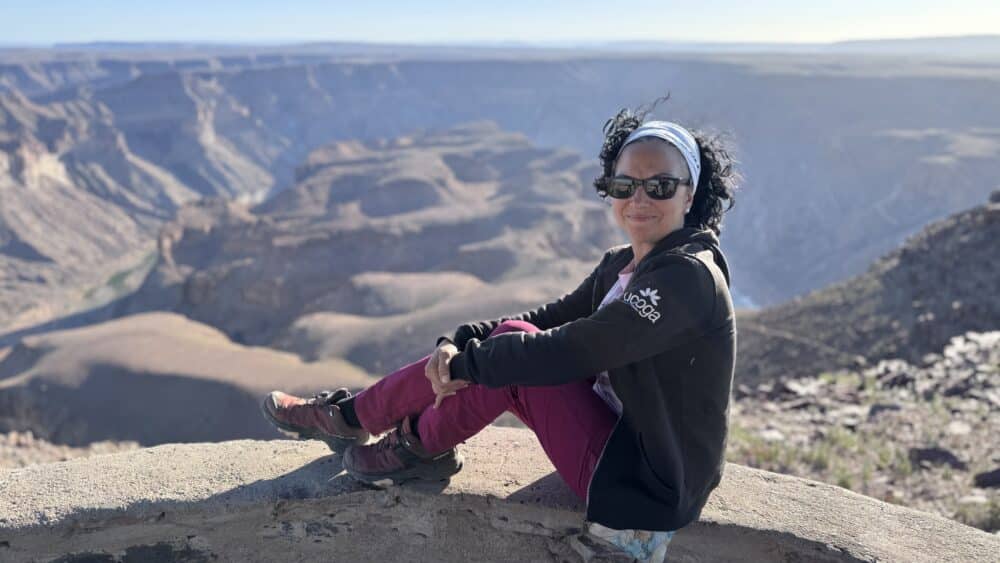
Day 20: Aus and Fish River Canyon: the second largest canyon in the world
We left Lüderitz to continue south through Namibia. This time we did stop in Off to visit the viewpoint overlooking the famous desert wild horses. We were so lucky that a large herd approached the observatory and practically surrounded us.
Before reaching the canyon, we also stopped at a very interesting farm where we tasted an excellent apple pie and bought some local products that we still remember.
In the afternoon we arrived at Fish River CanyonThe second largest canyon in the world and one of Namibia's great natural wonders. We visited several viewpoints, including the starting point of the famous five-day trek through the canyon.
What impressed us most was not only the vastness of the landscape, but the feeling of absolute solitude. At some viewpoints, we were completely alone, facing kilometers and kilometers of rock, silence, and nature.
That night, under one of the most starry skies of the entire trip, we began to accept that our adventure through Namibia was coming to an end.
We tell you about all the viewpoints and tips for visiting this area in our Fish River Canyon guide.
Day 21: Ai-Ais: Relaxing in the hot springs of southern Namibia
After enjoying the sunrise over Fish River Canyon again, we set off for Ai-Ais, located at the bottom of the canyon.
After so many miles of road, safaris, and hikes, the hot springs felt like a gift from heaven. We spent a good part of the day alternating between the outdoor and indoor pools while we rested and recharged.
We also experienced a very special moment watching the hikers arrive after completing the demanding five-day trek through the canyon. Many arrived excited, amidst applause and the ringing of bells, celebrating the end of an adventure that had seemed truly challenging.
It was a quiet day, dedicated simply to enjoying the place and the end of the trip.
We share our experience and all the practical information in the Ai-Ais Hot Springs guide.
Day 22: Hardap National Park: Our last night in Namibia
For our last night in Namibia we chose Hardap National Parkmainly due to its proximity to Windhoek and the airport.
Along the way we stopped at the curious Canyon RoadhouseA place filled with vintage cars and decor that reminded us of classic American highways. We also saw giraffes by the roadside and continued observing everyday scenes of Namibian life that had given us so much to think about during our trip.
Upon arriving in Hardap, we were surprised to find the facilities enormous and practically empty. We spent the afternoon unpacking, cleaning the car, packing our suitcases, and enjoying the reservoir and the sunset.
It was a perfect farewell to Namibia: one last barbecue, one last starry sky, and many conversations reminiscing about everything experienced during those three weeks.
We'll tell you what to see and whether this stop is worth including in our Hardap National Park guide.
Days 23 and 24: Return to Windhoek and back home
Before returning the 4x4, we had one last mission: to donate all the food, clothing, and medicine we had left over from our trip. We found a small health center near Kalkrand where they could use everything—a particularly beautiful experience for the children, who perfectly understood the importance of sharing when you have more than you need.
Afterwards we arrived in Windhoek, returned the vehicle and headed to the airport to begin the return journey.
The next day we landed in Barcelona, bringing to an end one of the most incredible adventures we have ever experienced as a family.
Namibia gave us safaris, deserts, breathtaking landscapes, and nights under millions of stars. But it also taught us a great deal about history, inequality, nature, and freedom.
If you're thinking about doing a self-guided trip through Namibia, we highly recommend it. It was, without a doubt, one of the best trips of our lives.
Map of destinations, campsites and our route through Namibia
To plan and also to improvise our trip, we made this mymaps with all the destinations, tourist attractions, points of interest, campsites, some gas stations and supermarkets that were very useful to have and that I leave here in case it is useful for you too.
Would we change anything about this route through Namibia?
Honestly, very little.
The route allowed us to see practically all the great must-see sights of Namibia: Etosha National Park, Caprivi Strip, Bwabwata, Damaraland, Spitzkoppe, Swakopmund, Walvis Bay, Sossusvlei, Deadvlei, Lüderitz and Fish River Canyon.
If we had to change anything, we would probably remove a night in Lüderitz to add it in another area of the trip or to enjoy Fish River Canyon more calmly by stopping halfway at one of the Route 66-style campsites that I'll tell you about that we saw before arriving at Fish River Canyon.
We would also dedicate a few more days to Caprivi and Bwabwata, two of the great surprises of our route, because we loved them, but I must say that we will make up for this soon because this summer we are returning to the area to see Botswana and South Africa!
In any case, we believe this itinerary works very well for a first visit to Namibia and allows you to discover much of the country's enormous diversity.
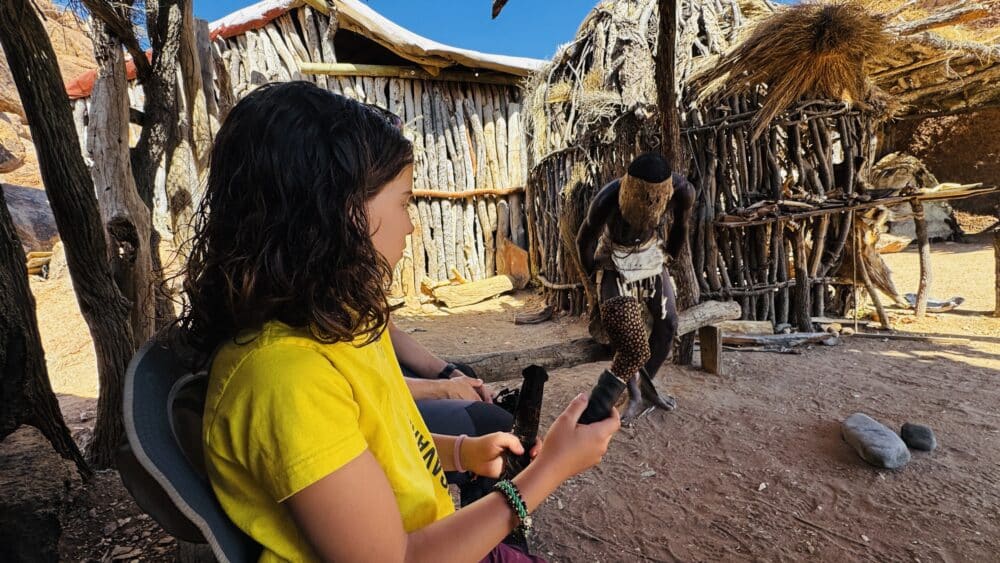
Our budget for this 24-day Namibia tour
We took this route as a family, traveling 2 adults and 2 childrenDuring 24 days (22 effective days of travel).
The approximate total cost of the trip was €13.313, including:
- International flights.
- 4x4 rental with two rooftop tents.
- Travel insurance.
- Gasoline.
- Campsites and accommodations.
- Tickets to national parks.
- Activities and excursions.
- Food and restaurants.
- Visas
Although it is not a cheap destination, we believe that the cost-to-experience ratio is extraordinary.
You can find the full and detailed budget in our guide on how much it costs to travel to Namibia independently.
Is a family trip through Namibia worthwhile?
Absolutely yes.
Namibia struck us as one of the best destinations in the world for family travel if you enjoy nature, adventure, and freedom of movement.
Our children enjoyed seeing elephants, giraffes, rhinos, hippos, seals, penguins, and hundreds of other animals in their natural habitat. But they also learned about geography, history, social inequality, and nature conservation.
In addition, traveling in 4x4 with rooftop tents He turned every day into a small adventure.
It's not a comfortable or particularly cheap trip, but it is one of those trips that you remember for a lifetime, and the destination is super safe; the least safe thing is that any hospital is very far away, so you have to go with a very good first-aid kit and be careful not to have any accidents.
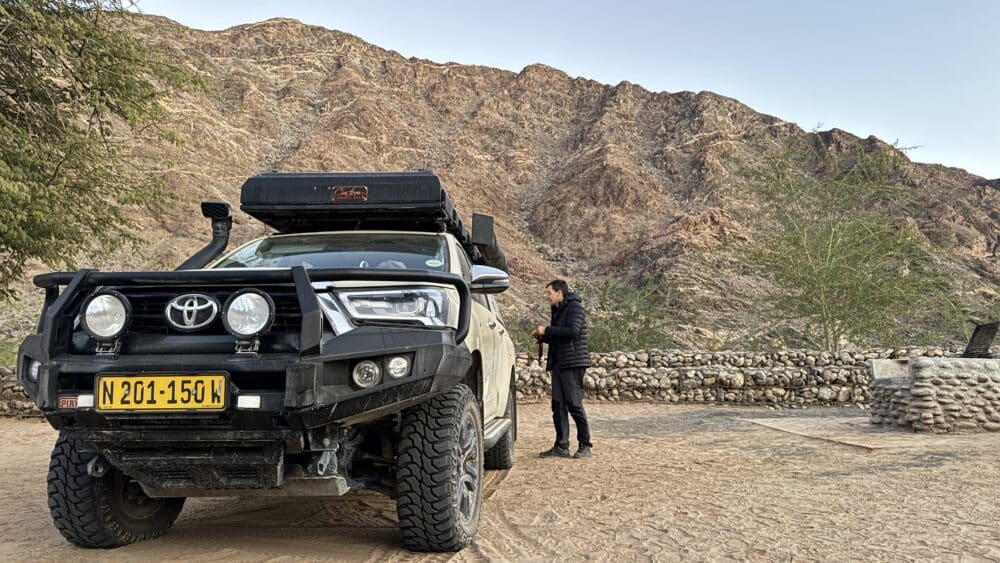
Tips for planning a self-guided trip through Namibia
After traveling more than 5.000 kilometers across the country, these would be our main tips:
- reserve the 4 × 4 many months in advance.
- Hire a travel insurance with good medical coverage.
- Pack warm clothes if you are traveling during the Southern Hemisphere winter.
- Download the offline maps before leaving.
- Don't underestimate the distances.
- Book your campsites within Etosha and Sesriem in advance.
- Try to drive only during the day.
- Dedicate at least three weeks to truly enjoy the country.
IMPORTANT TIPDon't travel to Namibia without a good travel insuranceSeriously. The distances there are enormous, private healthcare is expensive, and if something happens in the middle of a national park or in a remote area, helicopter evacuation can cost a fortune. After thoroughly comparing different options, we hired... IATI StarIATI is the only insurer with over one million euros in medical coverage, which is crucial in destinations where any unexpected event can significantly increase costs. Furthermore, IATI offers 24/7 Spanish-language support and an app for online medical consultations, which was incredibly useful during our trip. Here's our link with 5% discount on any IATI travel insurance policy If you go to Namibia, it's really worth traveling with peace of mind.
Frequently asked questions about a self-guided tour of Namibia
How many days does it take to travel around Namibia?
Although it is possible to visit Namibia in 10 or 15 days, we believe that to truly enjoy the country, it is ideal to dedicate more time to it. at least three weeksWe carried out a 24-day Namibia itinerarycovering more than 5.000 kilometers and visiting places as diverse as Etosha, Caprivi, Spitzkoppe, Sossusvlei, and Fish River Canyon. With less time, you would have to eliminate several stages.
Is it safe to travel independently to Namibia?
Yes. Namibia seemed to us to be one of the safest countries in Africa for independent travel. During our three-week trip, we had no problems. However, it's advisable to avoid driving at night, be cautious in large cities, and purchase good travel insurance, as distances are vast and many hospitals are hundreds of kilometers from the national parks.
Is it possible to travel around Namibia in a regular car?
It depends on the route. If you're only visiting Windhoek, Swakopmund, or Sossusvlei, you could use conventional tourism. However, for a independent route through Namibia like ours, we clearly recommend a 4 × 4especially if you plan to visit Bwabwata, Damaraland, Skeleton Coast or drive on some stretches of sand and rougher tracks.
What is the best time to travel to Namibia?
The best time to do a independent trip to Namibia It's usually between May and October, during the Southern Hemisphere winter. Temperatures are more pleasant, there's hardly any rain, and it's much easier to spot wildlife in parks like Etosha or Bwabwata. We traveled between June and July and found excellent conditions for safaris.
How much does a tour of Namibia cost?
The budget depends a lot on the type of trip. In our case, a 24-day family itinerary through NamibiaTraveling with 2 adults and 2 children in a 4x4 with rooftop tents, the approximate cost was €13.313 including flights, vehicle, fuel, accommodations, entrance fees, activities, and travel insurance. You can find the full breakdown in our article on how much it costs to travel independently in Namibia.
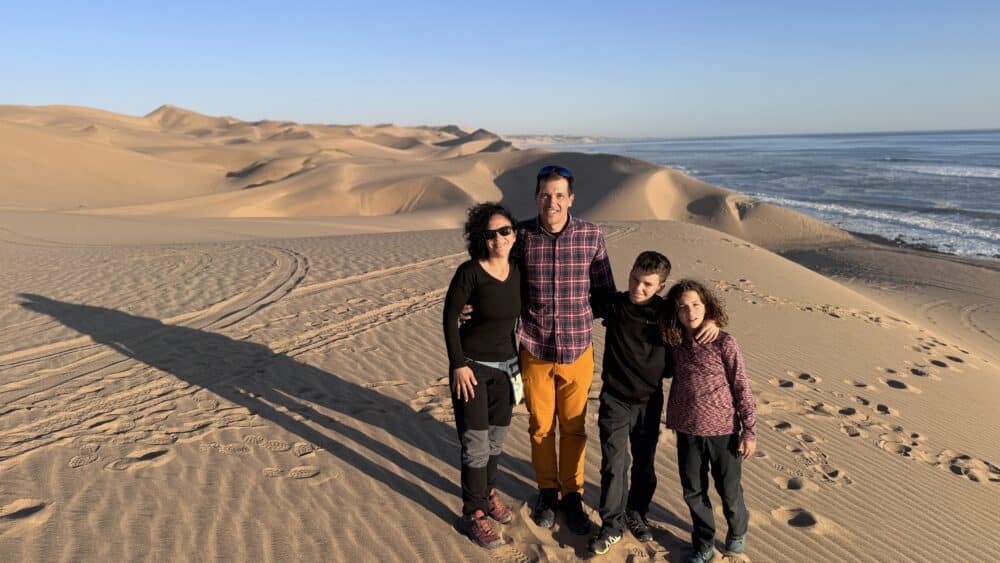
Our final opinion on Namibia
When we started planning this trip we were looking for safaris, deserts and adventure.
We came back with much more.
Namibia gave us some of the most breathtaking landscapes we have ever seen, nights under impossible skies, encounters with wild animals in their natural habitat, and a sense of freedom that is hard to find in other destinations.
But it also forced us to reflect on the country's history, the inequalities that still exist, and the everyday reality of many people we met along the way.
Therefore, if you ask us if it's worth doing a 24-day independent tour of NamibiaOur answer is simple:
Without a doubt. It's one of the most special trips we've ever taken as a family.
Is this your first time in Namibia?
👉 Start with our Namibia travel guidewhere you will find all the information about budget, best time, safety, 4x4 rental, accommodation, visa and route planning.
After:
Other related guides:
- 24-day Namibia itinerary
- Namibia: What to see
- Namibia on your own
- How much does it cost to travel to Namibia?
- Namibia with children
Latest posts from our blog
-
Definitive manual for traveling by motorhome【2024】
Super complete manual for traveling by motorhome with all the answers to your questions.
-
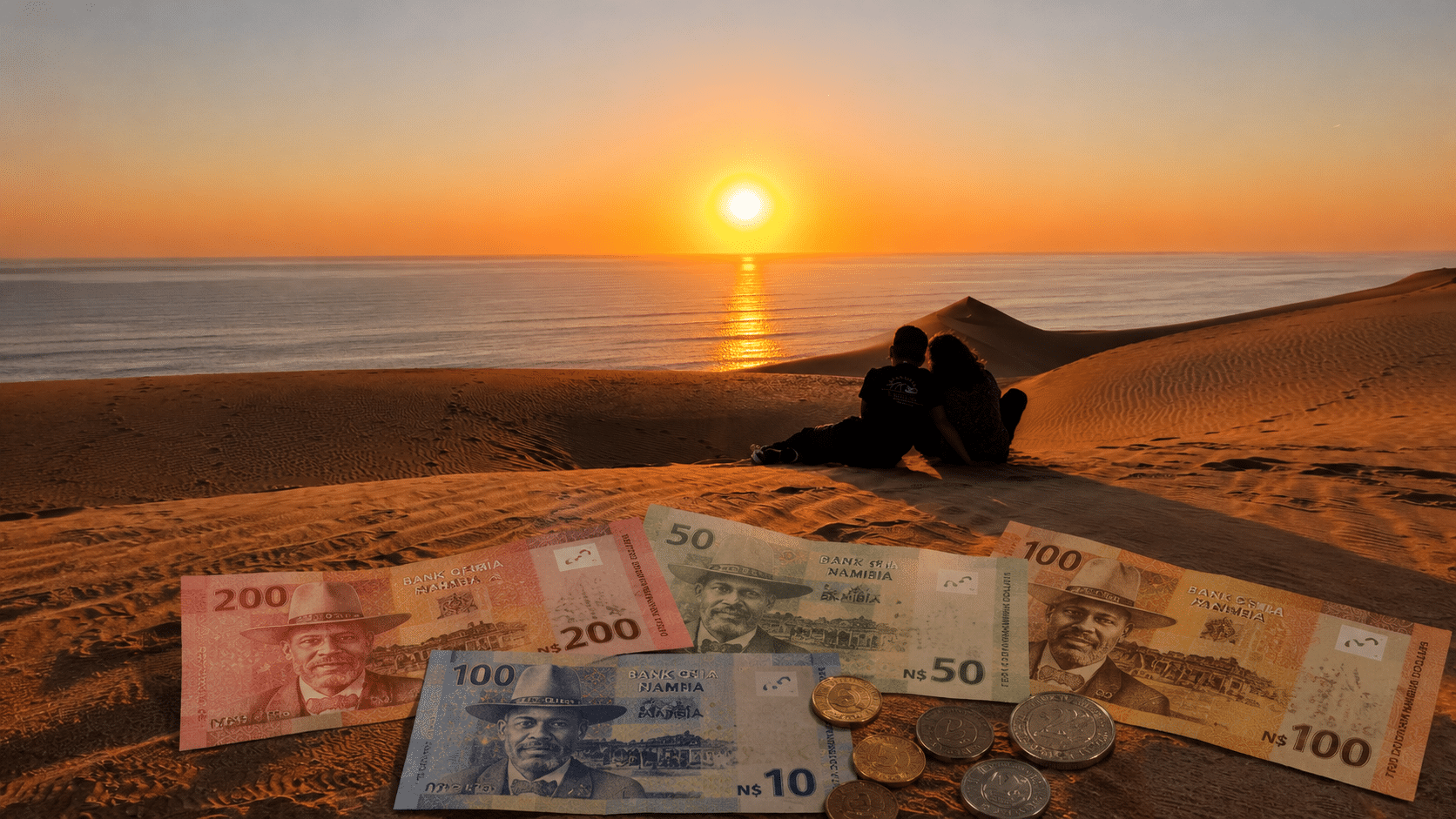
How much does a self-drive trip to Namibia cost in a 4x4 with a tent (as a family)?
Namibia is not just a destination; it's an experience that will be etched in your family's memory forever. A country of breathtaking landscapes, free-roaming animals, and endless trails best enjoyed independently, at your own pace, and with plenty of curiosity. We did it as a family, for 24 days (22 on the road), in a…
-
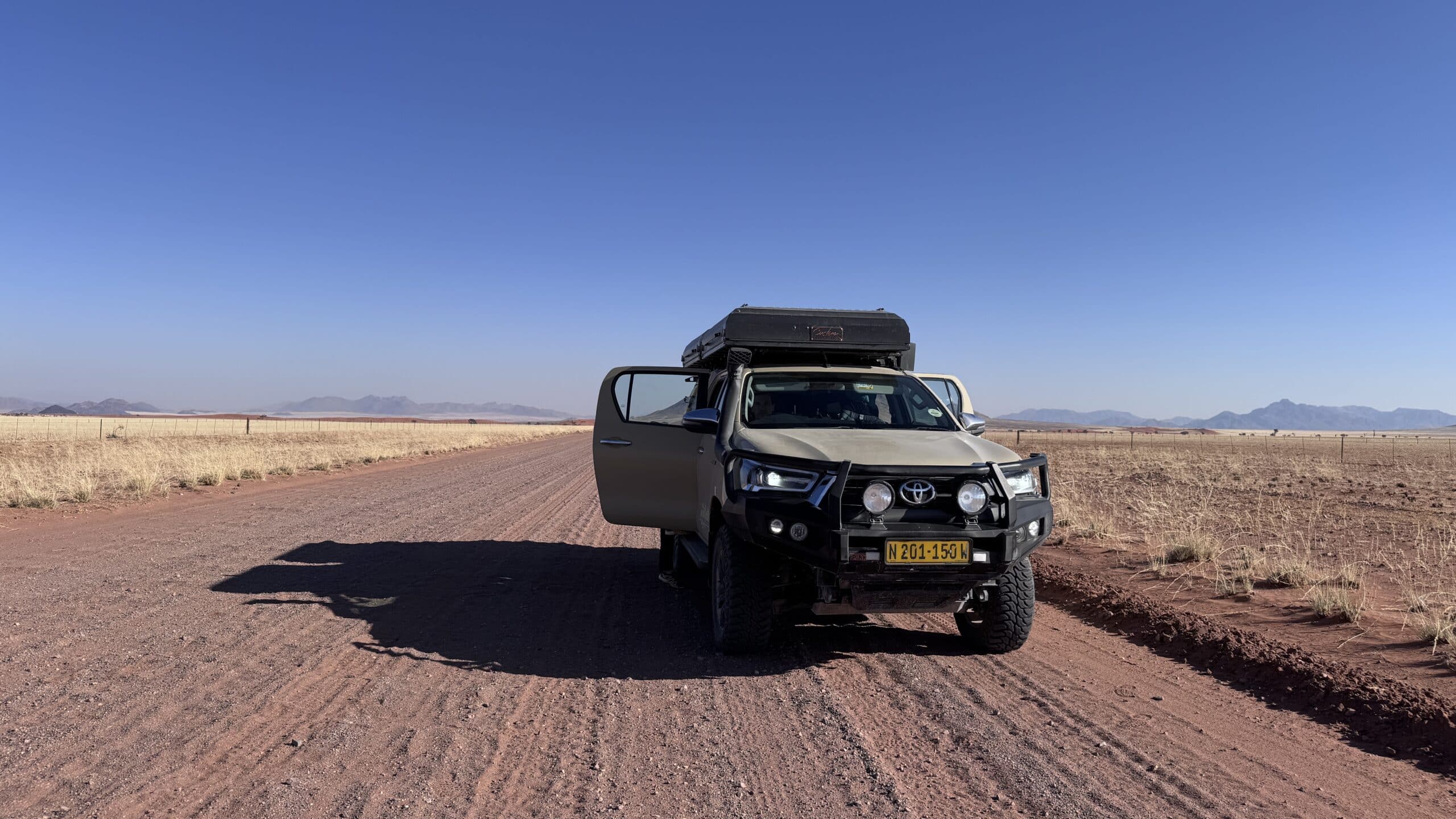
24-day independent family tour of Namibia: complete 4x4 itinerary
Are you thinking of taking a trip to Namibia on your own? In this post, we'll tell you about our complete 24-day family itinerary through Namibia, exploring the country in a 4x4 with rooftop tents, including safaris, deserts, national parks, historic villages, and otherworldly landscapes. A travelogue of…
-
Namibia Trip: Complete Guide for Independent Travel (24-day Itinerary, What to See and Tips Based on Our Experience)
Are you thinking of planning a trip to Namibia on your own and don't know where to start? After traveling the country for 24 days as a family in a 4x4 with rooftop tents, we've put together this comprehensive guide with everything we wish we had known before our trip. Here you'll find information…
Ethical code:
On our blog you will find affiliate links. These are always placed with our highest ethics. We never publish any service or product that we have not used before and that we are sincerely happy with. That is why our recommendations are always ethical. In addition, there is no additional cost for you to book through our links and, on the other hand, it means a small commission for us that helps us maintain this blog so that you can continue enjoying it for free.